
DASH Diet Basics: What It Is and How to Actually Start
If you've been told to "watch your sodium" or "eat more potassium-rich foods" for your blood pressure, you've likely run into the term DASH diet somewhere along the way. Despite the name, it's not a restrictive diet in the way that word usually gets used. It's an eating pattern with real research behind it, and it's a lot more approachable than it sounds.
What DASH Actually Stands For
DASH stands for Dietary Approaches to Stop Hypertension. It was developed through clinical research funded by the National Heart, Lung, and Blood Institute (NHLBI), specifically to find out whether food choices alone could meaningfully lower blood pressure. The research found that they can.
Here's the part that tends to surprise people: DASH doesn't require any special foods, products, or supplements. It's built entirely around groceries you can find in a regular store. It's less "a diet to go on" and more "a pattern to build your everyday eating around."
What It Emphasizes, and What It Limits
At its core, DASH shifts the balance of what's on your plate:
More of:
Vegetables and fruits
Whole grains
Fat-free or low-fat dairy
Fish, poultry, beans, and nuts (as your main protein sources)
Less of:
Fatty or red meats
Full-fat dairy
Sweets and sugar-sweetened drinks
Tropical oils like coconut and palm oil
Sodium
That sodium piece is the one most people have heard about, and for good reason. DASH sets a daily sodium target of 2,300 mg, with 1,500 mg as a stricter goal for people who want an even bigger effect on their blood pressure. For context, most of the sodium in a typical American diet comes from processed and packaged foods, not the salt shaker, which is why label reading ends up being such a useful skill on this plan.
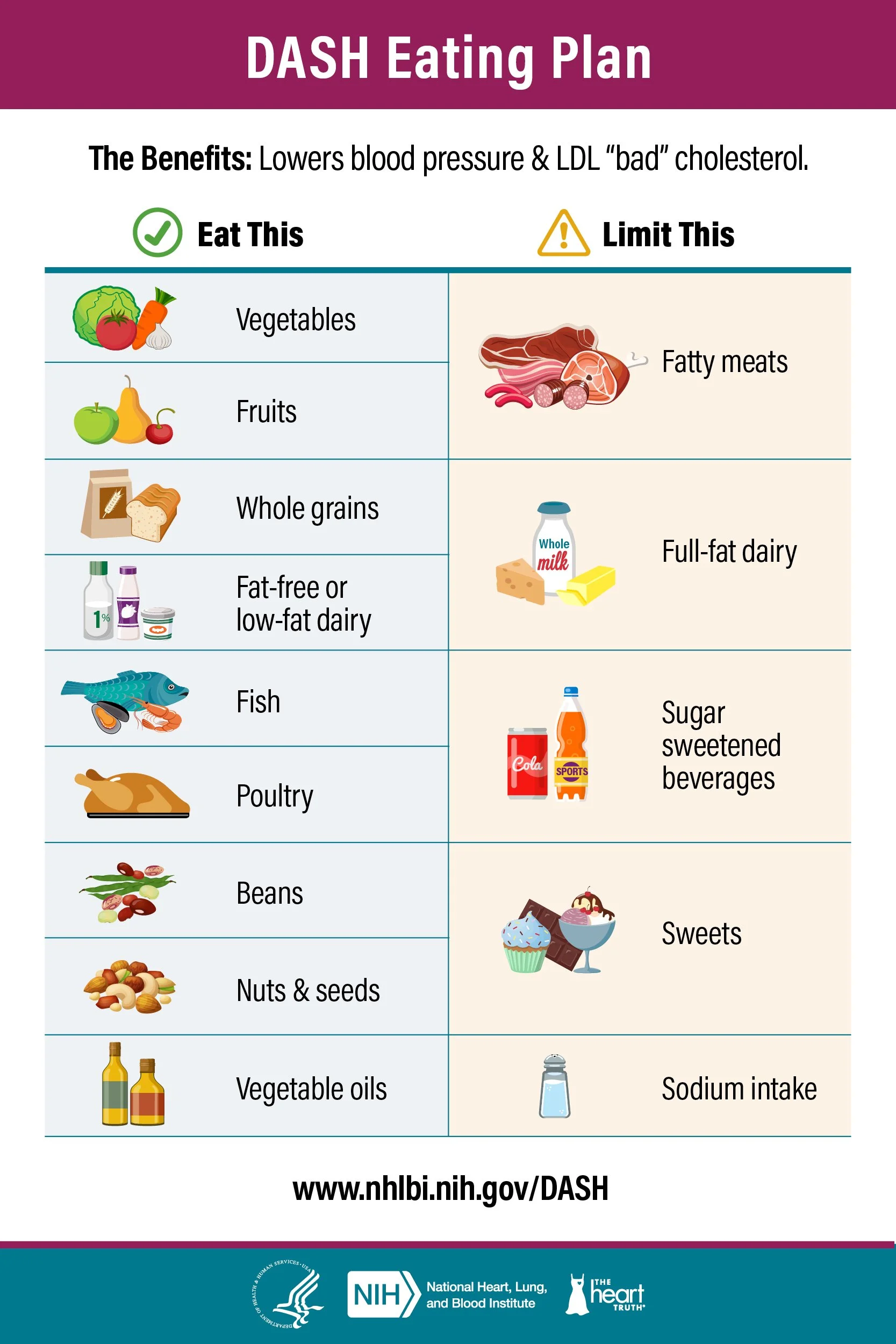
DASH Eating Plan infographic from the NIH National Heart, Lung, and Blood Institute. Lists foods to eat: vegetables, fruits, whole grains, low-fat dairy, fish, poultry, beans, nuts and seeds, and vegetable oils. Lists foods to limit: fatty meats, full-fat dairy, sugar-sweetened beverages, sweets, and sodium. Notes the plan lowers blood pressure and LDL cholesterol.
Why It Works
DASH isn't just about cutting sodium. The foods it emphasizes happen to be rich in potassium, calcium, magnesium, and fiber, nutrients that research has independently linked to healthier blood pressure. So you're not just removing something that raises blood pressure. You're actively adding in the nutrients that help lower it. That combination is a big part of why the research on DASH has shown measurable results, and why it's recommended alongside other heart-healthy habits like staying active, limiting alcohol, and managing stress.
It's also worth knowing that DASH can support weight loss too, simply because it's naturally lower in calorie-dense processed foods and higher in produce. That's a nice side effect for some people, but it's not the main point. The main point is blood pressure, and it works whether or not weight loss is part of your goals.
The American Heart Association points to this same eating pattern as one of the most effective diet-based ways to manage blood pressure, right alongside limiting sodium and alcohol and staying active. Learn more here at the National
How to Actually Start (Without Overhauling Everything at Once)
The research behind DASH used full meal plans, but that doesn't mean you need to flip your entire kitchen overnight. A few realistic starting points:
Pick one meal to rebuild first. Add a vegetable or fruit to it, and see what that feels like before changing anything else.
Start reading labels for sodium, especially on foods that don't taste salty. Bread, sauces, and cereal are common surprises.
Swap one processed protein for a whole one this week, like trading deli meat for grilled chicken or beans.
Add, don't just subtract. Building in more potassium-rich produce often does more for the pattern than obsessively cutting things out.
Small, consistent swaps tend to stick better than an all-at-once overhaul, and they add up the same way the shared root causes we talked about in our last post do: improvements in one area tend to support the others.
This article is for general education and isn't a substitute for personalized medical or nutrition advice. Talk with your healthcare provider about what's right for your specific health situation.
